Please register with PsychEdCourses™ to view free course study materials.
Once you are logged in, simply click on the course title or picture to view course outline and study guide, open-book exam, and text/dvd purchasing information.
Registration is Free and Easy!
If you have already finished your study materials and open book exam, you can get your CE credits by clicking on Purchase Now! Be sure to check the unlimited courses for 1 year special purchase offer.
|
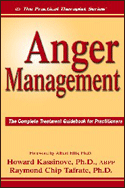
Anger Management
The Complete Treatment Guide for Practitioners
by
Howard Kassinove, Ph.D. &
Raymond Chip Tafrate, Ph.D.
CE Contact Hours: 17.50
Course Fee: $64.99
Course Format: Book
Course Description:
Whatever your professional setting, if you see angry clients, this indispensable resource for practitioners will give you powerful tools to help them understand, manage, and prevent unhealthy anger.
Based on the authors’ detailed and empirically validated “Anger Episode Model,” this book presents a comprehensive, state-of-the-art anger management program, complete with dozens of case examples, exercises, and easy-to-use informative client handouts.
|
|
|
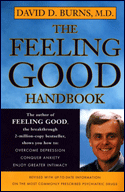
The Feeling Good Handbook
by
David D. Burns, M.D.
CE Contact Hours: 27.75
Course Fee: $64.99
Course Format: Book
Course Description:
Dr. Burns offers a comprehensive and clear program for understanding and treating depression, anxiety, procrastination, communication, and relationship problems from a cognitive-behavioral perspective. Countless activities, handouts, and homework assignments that can be used by clients to reinforce in-session work are carefully explained and illustrated.
In addition, a valuable reference to anti-depression and anti-anxiety medications is included, covering prescription guidelines, side effects, contraindications, and a detailed discussion of polypharmacy practices. Finally, an entire section of this handbook contains indispensable suggestions for therapists on how to effectively deal with difficult patients.
|
|
|
How to Control Your Anxiety Before It Controls You
by
Albert Ellis, Ph.D.
CE Contact Hours: 12.75
Course Fee: $64.99
Course Format: Book
Course Description:
Dr. Ellis explains the harmful effects of anxiety, how it develops, its symptoms, and how anxiety is maintained from a cognitive-behavioral perspective. He offers in-depth analyses of the faulty perceptions of anxious individuals, and how they can be changed. In an easy to comprehend narrative style, replete with case examples, Dr. Ellis demonstrates numerous cognitive and behavioral techniques to effectively treat anxiety within the REBT framework.
|
|
|
How to Control Your Anger Before It Controls You
by
Albert Ellis, Ph.D. &
Raymond Tafrate, Ph.D.
CE Contact Hours: 8.50
Course Fee: $45.00
Course Format: Book
Course Description:
Drs. Albert Ellis and Raymond Tafrate offer experience gleaned from decades of professional practice helping clients overcome anger management problems. Their combined research and knowledge is clearly presented, replete with step-by-step directions on how to use a variety of cognitive-behavioral techniques within the REBT methodological framework.
|
|
|
Integrative Brief Therapy
Cognitive, Psychodynamic, Humanistic and Neurobehavioral Approaches
by
John Preston, Psy.D.
CE Contact Hours: 10.75
Course Fee: $55.00
Course Format: Book
Course Description:
Dr. Preston offers a practical handbook for mental health therapists on how to maximize the benefits of brief therapy. Therapists will learn guidelines for general treatment strategies within a brief therapy framework. The author addresses importance of early, accurate assessment from a multi-modal perspective of client pain, problems, and the healing process, including psychodynamic, humanistic, cognitive, and neurobiological treatment implications associated with each perspective. This book explains how to assess client and therapist psychological assets and liabilities that hamper and help emotional healing.
|
|
|
The 60-Second Shrink
101 Strategies For Staying Sane in a Crazy World
by
Arnold A. Lazarus, Ph.D. & Clifford N. Lazarus, Ph.D.
CE Contact Hours: 8.50
Course Fee: $45.00
Course Format: Book
Course Description:
Drs. Arnold and Clifford Lazarus present over 100 challenging emotional situations and their solutions in one small, easy-to-read and understand volume. Compiled from weekly radio health talk-shows co-hosted by the authors, topics as diverse as procrastination, parenting, aggression, stress, PMS, ADHD, weight management, depression, panic attacks, effective communication, and relationship issues are presented in brief vignettes, followed by one and two-page discussions of causes and resolutions from a cognitive-behavioral perspective. Written in language easily understood by the non-professional, therapists will find this little book a treasure trove of practical and sensible advice to help demystify the professions of mental health for their patients.
|
|
|
Motivational Interviewing and CBT
Combining Strategies for Maximum Effectiveness
by
Sylvie Naar, Ph.D. and Steven A. Safren, Ph.D., ABPP
CE Contact Hours: 12.25
Course Fee: $64.99
Course Format: Book
Course Description:
Motivational Interviewing and CBT—Combining Strategies for Maximum Effectiveness is designed as a treatment manual providing clinical tools that integrate motivational interviewing (MI) and cognitive-behavioral therapy (CBT) to assist professionals in the treatment of a variety of presenting issues. MI strategies are used to increase as well as sustain client motivation before and throughout the implementation of CBT. Included are extensive sample dialogues form case examples, learning exercises for practitioners, and reproducible client handouts.
|
|
|
Interviewing for Solutions
Third Edition
by
Peter De Jong, Ph.D. &
Insoo Kim Berg, MSSW
CE Contact Hours: 28.50
Course Fee: $64.99
Course Format: Book
Course Description:
The materials for this course are designed to offer interviewing skills training within the solution building model. Practitioners will discover how to build solutions with clients through an understanding of the stages of solution building, develop skills for not knowing, recognize and amplify client wants, and build client strengths and successes. Specific interviewing skills are amply demonstrated through text excerpts of actual client sessions with the authors, Peter de Jong and Insoo Kim Berg, codeveloper of the solution-focused approach.
The course details feedback formulation for clients, skills for working in later sessions, how to stimulate, encourage, and gauge client progress, crisis situations, diversity issues, and challenges in applying solution-focused skills in traditional problem-focused settings. In addition, the authors discuss research outcome data and theoretical implications of the solution building approach to therapy. Finally, creative and successful applications of solution building principles and practices around the world are presented. An instructional DVD of recorded client sessions with the authors is available to accompany the text.
|
|
|
Managing Boundaries and Multiple Relationships
from Issues and Ethics in the Helping Professions, 8th Edition
by
Gerald Corey, Ph.D.
Marianne Schneider Corey, M.A. &
Patrick Callanan, M.S.
CE Contact Hours: 4.25 (including 4.25 in Ethics)
Course Fee: $25.00
Course Format: Book
Course Description:
Licensure boards in almost every state are reporting increases in ethical infractions as a major concern. Consequently CE credits specifically focused on ethics are now required by many boards for license renewal. Material for this course is from Corey, Corey, and Callanan's updated classic, Issues and Ethics in the Helping Professions, now in its seventh edition. Chapter 7 in the text specifically addresses dual and multiple relationship issues, the number one complaint reported by state licensure boards in an informal survey by PsychEdCourses™.
This course provides an excellent summary of recommendations by professionals to help practitioners increase their awareness of the complexities inherent in these important issues. In addition, the authors present guidelines for responsible decision-making on a comprehensive array of relationship topics, including professional ethical and legal standards, unique challenges for rural practitioners, bartering, gifts, socializing with clients, sexual attractions and relationships with clients, and the pros and cons of touching in therapy.
|
|
|
The Art of the Psychotherapist
by
James F.T. Bugental, Ph.D.
CE Contact Hours: 18.25
Course Fee: $64.99
Course Format: Book
Course Description:
This course is must reading for any practicing psychotherapist. Although presented from an existential perspective, Dr. Bugental's attention to the subtle and complex nuances of psychotherapeutic interchange transcend theoretical orientation. The manner in which he makes explicit the aspects of therapy that defy articulation is the very art he so successfully elucidates.
Course materials provide instruction into the art of therapeutic conversation, including an exploration of five levels of presence, four modes of interpersonal press, and four levels of topical paralleling. In addition, methods for working with resistance, helping clients identify their concerns, and ways to phrase and time interventions to encourage life-changing work with clients are presented. Exercises to increase therapist skills presented in the text are included with accompanying observation schedules and practice sheets.
|
|
|
Therapeutic Communication
Second Edition
by
Paul L. Wachtel, Ph.D.
CE Contact Hours: 24.25
Course Fee: $64.99
Course Format: Book
Course Description:
Therapeutic Communication—Knowing What to Say When, examines how to formulate comments to patients of psychotherapy in ways that facilitate positive therapeutic experience and avoid comments that may unintentionally counter the therapeutic purpose. Paul Wachtel’s focus on the subtle nuances of phrasing and meaning in therapist comments and their effects on patients offers a much overlooked and needed balance in training which has traditionally emphasized therapist listening skills.
Although Dr. Wachtel’s clinical work is guided by what he terms cyclical psychodynamic theory, clinicians of other theoretical persuasions, from novice to expert status, will find the rationale behind his clinical examples and recommendations is pantheoretical. Through keen observation and critical analysis, this well-seasoned clinician and distinguished professor de-mystifies and makes explicit a vital part of what constitutes the “art” of psychotherapy. This is a must-read for any serious student/practitioner of psychotherapy.
|
|
|
Solution-Oriented Hypnosis
An Ericksonian Approach
by
William Hudson O'Hanlon, M.S. and Michael Martin, J.D.
CE Contact Hours: 10.75
Course Fee: $64.99
Course Format: Book
Course Description:
This course is a verbatim transcript of a two-day workshop by Bill O’Hanlon, an expert on hypnosis and solution-oriented psychotherapy. A former student of one of the most influential figures in hypnosis, Milton H. Erickson, M.D., O’Hanlon explains and instructs Ericksonian hypnosis within a solution-oriented framework.
The course is filled with detailed descriptions of trance inductions and trance phenomena, and how to ethically apply solution-oriented hypnosis to assist clients in the healing process. Special attention is given to sexual abuse survivors, those presenting with pain management concerns, and somatic problems. O’Hanlon discusses the clinical rationale for utilizing solution-oriented hypnosis as well as when its use is contraindicated. He explains, in a lively and easy to understand style, when, why, and how to do trance, and what to do once clients are in trance. In helping clients evoke experience through hypnosis, O’Hanlon’s goal of making “the difference between therapy that really has an impact on people and therapy that is just a bunch of clever, good ideas” is accomplished.
|
|
|
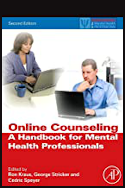
Online Counseling
A Handbook For Mental Health Professionals—2nd Edition
by
Ron Kraus, Ph.D., C.S.W., George Stricker, Ph.D., & Cedric Speyer Ph.D., Editors
CE Contact Hours: 18.00 (including 1.5 in Ethics)
Course Fee: $64.99
Course Format: Book
Course Description:
This course is essential reading for any mental health professional considering the relatively new discipline of online counseling. Written by 15 experienced and successful authors who are pioneers in the research, development and practice of online counseling, this valuable handbook provides practical guidelines to help professionals become competent online mental health service providers. Topics include the historical development of online health care, online counseling research and technology, and legal, ethical, and multicultural considerations. Facets of human behavior and communication unique to the Internet are explored in conjunction with treatment strategies and skills necessary for online service delivery. Other topics include online group work, Internet-based psychological testing and assessment, and business aspects of online counseling.
|
|
|
How to Keep People From Pushing Your Buttons
by
Albert Ellis, Ph.D. and Arthur Lange, Ed.D.
CE Contact Hours: 9.75
Course Fee: $50.00
Course Format: Book
Course Description:
Drs. Albert Ellis and Arthur Lange provide step-by-step instructions on how to utilize the principles of Rational Emotive Behavior Therapy (REBT) to deal effectively with life's button-pushers. Sated with real-life examples gleaned from decades of clinical experience and over 10,000 presentations, the authors demonstrate how to take control of your emotional overreactions to the daily hassles we all encounter. An easy-to-read narrative style makes this book an excellent resource for understanding the basic principles of REBT. In addition, the exercises and practice sheets at the end of chapters make useful client homework assignments to reinforce in-session learning of REBT concepts.
|
|
|
Rational and Irrational Beliefs
Research, Theory, and Clinical Practice
by
Daniel David, Ph.D., Steven Jay Lynn, Ph.D., and Albert Ellis, Ph.D., Editors
CE Contact Hours: 17.75
Course Fee: $64.99
Course Format: Book
Course Description:
In Rational and Irrational Beliefs: Research, Theory, and Clinical Practice, leading scholars, researchers, and practitioners of rational emotive behavior therapy (REBT) and other cognitive-behavioral therapies (CBTs) share their perspectives and empirical findings on the nature of rational and irrational beliefs, the role of beliefs as mediators of functional and dysfunctional emotions and behaviors, and clinical approaches to modifying irrational beliefs, enhancing rational beliefs, and adaptive coping in the face of stressful life events. Offering a comprehensive and cohesive approach to understanding REBT/CBT and its central constructs of rational and irrational beliefs, contributors review a steadily accumulating empirical literature indicating that irrational beliefs are associated with a wide range of problems in living, and that exposure to rational self-statements can decrease anxiety and other psychological symptoms, and play a valuable role in health promotion and disease prevention. Contributors also identify new frontiers of research and theory, including the link between irrational beliefs and other cognitive processes such as memory, psychophysiological responses, and evolutionary and cultural determinants of rational and irrational beliefs.
A truly accessible, state-of-the-science summary of REBT/CBT research and clinical applications, Rational and Irrational Beliefs is an invaluable resource for psychotherapy practitioners of all theoretical orientations.
|
|
|
Hypnosis
A Comprehensive Guide
by
Tad James, Ph.D. with Lorraine Flores and Jack Schober
CE Contact Hours: 7.25
Course Fee: $40.00
Course Format: Book
Course Description:
Practitioners interested in hypnotherapeutic work will find Hypnosis a valuable resource manual containing theories and techniques from three distinctly different masters of the art of hypnosis. Detailed descriptions of methods developed by Milton Erickson, George Estabrooks, and Dave Elman are examined in conjunction with practical suggestions on how to optimize their effectivenss. Explained in terms easily understood even by those new to the science of hypnosis, the text provides numerous inductions and scripts useful to practitioners at any level of experience.
Following a brief, yet thoroughly researched history of hypnosis, the trance phenomenon is described along with techniques to help clients achieve deeper trance states important in healing. Additional topics explored include the impact of pre-talk, significance of suggestibility tests, and how to use post-hypnotic suggestions to maximize therapeutic effectiveness.
|
|
|
Becoming a Solution Detective
Second Edition
by
John Sharry, DPsych, Brendan Madden, MA, and Melissa Darmody, DPsych
CE Contact Hours: 7.75
Course Fee: $40.00
Course Format: Book
Course Description:
The authors of Becoming a Solution Detective—A strengths-based guide to brief therapy have succeeded in modeling one of the basic tenets in Solution-focused Brief Therapy (SFBT) of simplicity by translating complex psychological concepts, such as establishing a therapeutic alliance, developing effective listening skills, therapeutic goal-setting, and dealing with unmotivated clients into concise, easy-to-understand principles easily utilized by seasoned and novice professionals alike. Through case examples, case studies, and practice exercises, therapists can personally experience the effects of utilizing a SF approach in the therapy setting.
|
|
|
Shades of Loneliness
Pathologies of a Technological Society
by
Richard Stivers, Ph.D.
CE Contact Hours: 9.25
Course Fee: $50.00
Course Format: Book
Course Description:
Shades of Loneliness is a must read for any psychotherapist who has asked the question, “Why?” Focus in psychotherapy is generally at the micro level of an individual’s pathology. Even the variety of theoretical orientations that guide our treatment options are primarily focused on development of individual psychopathology and techniques to minimize or eliminate its effects on the individual. In much the same way we help clients gain insight into problematic cycles of behavior through an outsider perspective, Dr. Stivers helps us acquire a macro perspective of society’s, particularly technological society’s, role in the development and maintenance of pathological behaviors. He argues disorders of depression, obsessive-compulsion, schizophrenia, narcissism, and other neuroses are pathological extremes of loneliness exacerbated by the fragmentation and depersonalization of today’s technological civilization. This important wake-up call by Dr. Stivers includes suggestions to combat the debilitating effects of modern society by reconnecting with family, friends, and community through moral and cultural consciousness.
|
|
|
Rational Emotive Behavior Therapy
by
Albert Ellis, Ph.D. and Debbie Joffe Ellis
CE Contact Hours: 6.75
Course Fee: $35.00
Course Format: Book
Course Description:
Rational Emotive Behavior Therapy provides an introduction to the theory, history, research, and practice of the original cognitive-behavioral therapy created by co-author, Albert Ellis. Based on the premise that humans amplfy their natural tendencies toward over generalizing and faulty logic (irrational thinking) into unnecessary mental/emotional distress, Ellis, and his wife, Debbie, demonstrate how individuals can challenge dysfunctional thinking and alleviate much of their suffering through REBT techniques. Applicable to individuals and groups of all ages and across cultures, REBT is helpful for a range of mental health issues, such as depression, anxiety, anger management, PTSD, substance abuse, personality disorders, relationship issues, and others. REBT’s multi-modal techniques are presented in terms of their appropriateness for each of the disorders, therapeutic goals, and how they can be successfully applied, including excerpts from actual case studies with the authors. This user-friendly guide is an excellent primer for those who wish to further their understanding of the core tenets and philosophies of one of the most influential therapeutic movements of the twentieth century.
|
|

|
Feel the Way You Want to Feel...
No Matter What!
by
Aldo R. Pucci, PsyD
CE Contact Hours: 13.75
Course Fee: $64.99
Course Format: Book
Course Description:
Dr. Aldo Pucci has spent over a decade developing the philosophy and techniques of Rational Living Therapy, a unique synthesis of cognitive-behavioral therapy based on the work of CBT icons, such as Albert Ellis, Maxie Maultsby, and Aaron Beck. Feel the Way You Want to Feel…No Matter What! is an instruction manual to understand and implement Dr. Pucci’s highly effective techniques to ameliorate the thoughts and behaviors that lead to distressing emotional states of depression, low self-confidence, anger, anxiety, and others. He teaches how to work cooperatively with the body's and brain’s natural ways of functioning to improve mental and physical health and well-being while clarifying and achieving healthy goals. This course is an excellent introduction to cognitive-behavioral therapy and Rational Living Therapy. For those already familiar with cognitive therapy, this guide can be used as an effective tool to teach and reinforce self-regulating cognitive/behavioral skills with patients. Dr. Pucci’s relaxed and easy-to-understand narrative style makes this book a pleasurable journey for both therapist and patient toward improving mental health skills.
|
|
|
Becoming Solution-Focused in Brief Therapy
by
John L. Walter, M.S. & Jane E. Peller. M.A.
CE Contact Hours: 15.00
Course Fee: $64.99
Course Format: Book
Course Description:
The authors of BSFIBT present a step-by-step manual to learn the conversational skills in solution-building by redefining traditional pathologizing therapy through the positive assumptions and perspectives that inform their work. True to the solution-focused philosophy of “keep it simple,” each chapter outlines easy to understand, practical strategies and techniques to help clients utilize their own strengths and skills to break free of disabling negativism and blaming, and create a more positive, enabling perception of current and future situations.
The manual describes how the authors developed a solution orientation, and includes case examples to highlight the solution-building process in a variety of settings and situations. Ending each chapter are discussions of frequently asked questions from therapists-in-training workshops and seminars, with exercises to enhance skill development. This is a must-have classic resource for anyone interested in becoming a “conversational facilitator” of solutions within brief therapy.
|
|
|
More Than Miracles
The State of the Art of Solution-Focused Brief Therapy
by
Steve de Shazer, MSW & Yvonne Dolan, MA
with Harry Korman, MD, Terry S. Trepper, PhD,
Eric McColum, PhD, & Insoo Kim Berg, MSW
CE Contact Hours: 10.75
Course Fee: $55.00
Course Format: Book
Course Description:
More Than Miracles: The State of the Art of Solution-Focused Brief Therapy is the summary of a series of informal seminars with co-founders of SFBT, Steve de Shazer, and his wife, Insoo Kim Berg, and four of their close friends, all veteran experts in SFBT: Yvonne Dolan and husband, Terry Trepper, Eric McCollum, and Harry Korman. The monthly seminars were for the purpose of exploring how the SFBT approach reflected the ideas of Steve’s favorite philosopher, Ludwig Wittgenstein, and how these ideas could enhance the work of its practitioners. Reading and studying this text was reminiscent of attending the workshops conducted by Steve and Insoo in Milwaukee—a relaxed learning atmosphere among congenial mentors. The text commentaries provided by the authors while watching videos of sessions with their clients was like sitting in the observation room at the Milwaukee Brief Family Therapy Center listening to them discuss and explain intricacies of therapist/client interactions. More Than Miracles is a wonderful explanatory summary of the principles, primary tenets, and therapeutic techniques of the SFBT approach to therapy, useful to novice as well as experienced practitioners.
|
|
|
Mindful Therapy
A Guide for Therapists and Helping Professionals
by
Thomas Bien, Ph.D.
CE Contact Hours: 13.00
Course Fee: $64.99
Course Format: Book
Course Description:
In Mindful Therapy—A Guide for Therapists and Helping Professionals, Dr. Bien skillfully explains, through simple language, exercises, and insightful metaphors, how to incorporate the ancient Buddhist practice of mindfulness into therapeutic work with clients. Rather than another technique-driven theory, he suggests viewing clinical work with clients as part of a unified way of life—a mindful life in which therapists are more like the ancient healers. Expanding upon the Rogerian conditions for change—unconditional positive regard, empathy, and congruence—Dr. Bien shows us the Buddhist equivalents of love, compassion, and wisdom as the three antidotes to suffering, and how to use them as medicines for healing both ourselves and our patients.
|
|

|
The Psychology Industry Under a Microscope!
by
David B. Stein, Ph.D.
CE Contact Hours: 11.25
Course Fee: $60.00
Course Format: Book
Course Description:
The Psychology Industry Under a Microscope! explores why psychological treatment efficacy rates are so poor, why psychological testing is unreliable, and why diagnosis is uncertain. Dr. Stein also explores the weaknesses inherent in 115 APA accredited doctoral programs and what changes may help improve the effectiveness of the mental health clinician. He proposes a cognitive/behavioral diagnostic system that is far more cohesive and sensible than the piecemeal and confusing system currently in place. In addition, he introduces an easy to understand and innovative visual model that integrates all of clinical psychology and far surpasses any previous attempts at developing models. Dr. Stein also questions the recent resurgence of the disease model for diagnosis as well as the politics and economics that lie behind its current popularity. The thought-provoking ideas presented by Dr. Stein challenge currently accepted notions about the field and practice of professional mental health, yet are difficult to refute. This is a must-read essential for any student, professor, or clinician of mental health.
|
|

|
Rewriting Love Stories
Brief Marital Therapy
by
Patricia O’Hanlon Hudson, Ph.D. & William Hudson O’Hanlon, M.S., LCSW
CE Contact Hours: 8.00
Course Fee: $40.00
Course Format: Book
Course Description:
Rewriting Love Stories—Brief Marital Therapy is a solution-focused brief therapy model based within the authors’ narrative and constructivist/constructionist viewpoints, and decades of experience working successfully with couples in marital therapy. Written for therapists, Patricia Hudson and William O’Hanlon offer ideas and strategies that avoid a parallel process in therapy that mimics the very problems clients are hoping to change. Rather than engage in blaming, invalidation, and lengthy explanations, they suggest creating a collaborative therapeutic stance that acknowledges client abilities and strengths while helping them break destructive and unproductive patterns in their relationship. Through case examples and a relaxed narrative style, the authors demonstrate how to work with couples in ways that are simple, useful, and long-lasting within a brief therapy context.
|
|
|
Core Competencies in the Solution-focused and Strategic Therapies
Becoming a highly competent solution-focused and strategic therapist
by
Ellen Quick, Ph.D.
CE Contact Hours: 10.00 (including 1 in Ethics)
Course Fee: $50.00
Course Format: book
Course Description:
In Core Competencies in the Solution-Focused and Strategic Therapies, Dr. Ellen Quick explores ways to increase core proficiency levels in the work performance of mental health practitioners. She reviews the conceptual framework of both the Mental Research Institute and the Brief Family Therapy Center, and applies these concepts to the development of core competencies associated with intervention planning, implementation, evaluation, and termination within a culturally and ethically sensitive practice. Therapists will improve their knowledge, skills, and attitudes in ways to optimize their competency levels within each of these methodological approaches to “do more of what works” in an evidence-based practice.
|
|
|
When One Hour Is All You Have
Effective Therapy for Walk-In Clients
by
Arnold Slive, Ph.D. and Monte Bobele, Ph.D., Editors
CE Contact Hours: 13.00
Course Fee: $64.99
Course Format: book
Course Description:
When One Hour is All You Have is replete with practical how-to’s by over a dozen pioneers and seasoned experts on providing quality mental health care in a walk-in, single session context. From a variety of theoretical approaches, each expert contributor orients from the brief therapy principle that every therapy session may be the one and only session available with a client, and presents potential challenges and practical solutions to prepare therapists for optimizing effective service delivery within a single session perspective. Scanning the historical development of walk-in clinics in both the U.S. and Canada, evidence-based research with decades of case examples are used to demonstrate effective, yet practical applications of self-contained, single session therapy for a variety of therapeutic issues and services.
|
|
|
Ethical Issues in Supervision
from Issues and Ethics in the Helping Professions, 9th Edition
by
Gerald Corey, Ph.D.
Marianne Schneider Corey, M.A.
Cindy Corey, PsyD, &
Patrick Callanan, M.S.
CE Contact Hours: 2.75 (including 2.75 in Ethics)
Course Fee: $15.00
Course Format: Book
Course Description:
Licensure boards in almost every state are reporting increases in ethical infractions as a major concern. Consequently, CE credits specifically focused on ethics are now required by many boards for license renewal. Material for this course is from Corey, Corey, Corey, and Callanan's updated classic, Issues and Ethics in the Helping Professions, now in its ninth edition.
Corey, et al.’s excellent chapter on “Ethical Issues in Clinical Supervision,” discusses major concerns relevant to the supervisory process. The authors explore the primary goals of supervision as well as the importance of supervision in achieving and maintaining professional competence. The need for explicitly and openly addressing distinctions between supervisor and supervisee roles and responsibilities is repeatedly emphasized throughout the chapter. In addition, ethical challenges that arise when supervisors adopt multiple roles during the supervisory process are addressed. Ethical dilemmas encountered in supervision are explored from both the supervisor’s and supervisee’s perspectives. The text concludes with thought-provoking case examples of the major issues discussed.
|
|
|
The Latino Male
A Radical Redefinition
by
David T. Abalos, Ph.D.
CE Contact Hours: 13.75
Course Fee: $64.99
Course Format: Book
Course Description:
The Latino Male: A Radical Redefinition examines the challenges Latino males in the United States face today in defining their roles within the family, the community, and the culture. Dr. Abalos gives us an insider’s view of the problems created when Latino men cling to traditional cultural stories of themselves as mujeriego (womanizer), the macho male, and the dominant patriarch, and manifest these perceived roles in ways that are violent and destructive to self, family, and culture. He offers creative and healing strategies through stories of transformation in which the Latino male can discover a more positive, constructive identity and sense of self-hood, and be able to serve with love and justice. Dr. Abalos will forever change your perspective on the issues that confront today’s American Latino male.
|
|
|
Whispers From the East
Applying the Principles of Eastern Healing to Psychotherapy
by
Frances E. Steinberg, Ph.D.
& Richard G. Whiteside, M.S.W.
CE Contact Hours: 9.50
Course Fee: $50.00
Course Format: Book
Course Description:
Therapists who seek to expand their cross-cultural awareness of differing approaches to therapeutic healing will find Whispers From the East—Applying the Principles of Eastern Healing to Psychotherapy delivers an excellent introduction and overview to Eastern perspectives on psychological problems and treatment options framed within healing methods that have been practiced for centuries. At first glance, the terminology and concepts may appear foreign, even somewhat bizarre to Western practitioners. However, turn down the volume on Western cultural filters, and you will hear the gentle whisper of familiarity within the principles and metaphors artfully presented by Steinberg and Whiteside, who challenge us to “step back from the limitations of our daily lives and view ourselves and our clients from a broader perspective.”
|
|
|
Unraveling the ADD/ADHD Fiasco
Successful Parenting Without Drugs
by
David B. Stein, Ph.D.
CE Contact Hours: 9.00
Course Fee: $45.00
Course Format: Book
Course Description:
The number of children being diagnosed with ADD/ADHD has skyrocketed, along with prescriptions for Ritalin and other powerful amphetamine drugs to treat these problem children. This pharmaceutical answer to a behavioral disorder is one of the most controversial subjects in parenting today, and Dr. David Stein offers parents a safe, foolproof alternative. Challenging the disease theories of ADD/ADHD, Stein discusses the conditions in modern society and the American family that cause so many children to hate schoolwork and behave disrespectfully to all authority figures. Rejecting the pill solution, he presents a truly effective parent training program called the Caregivers' Skills Program that helps children learn appropriate behavioral and cognitive skills permanently, without drug therapy. Parents are trained to teach their children to love reading and learning, and to respect authority at home and at school. Stein presents case studies from his own highly successful practice that demonstrate the remarkably effective CSP that can help parents, educators, physicians and therapists treat today's problem children.
|
|
|
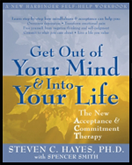
Get Out of Your Mind & Into Your Life
The New Acceptance and Commitment Therapy
by
Steven Hayes, Ph.D. with Spencer Smith
CE Contact Hours: 15.00
Course Fee: $64.99
Course Format: Book
Course Description:
Get Out of Your Body & Into Your Life—The New Acceptance & Commitment Therapy is a course that can meet several objectives for practitioners. First, it is a great introduction to Acceptance and Commitment Therapy (ACT), with an explanation of its historical roots in Relational Frame Theory (RFT) as well as the basic tenets that underlie ACT. Additionally, the workbook format presents ideas in ways that are easily grasped and reinforced with countless exercises so that therapists may enhance their own self-care and/or work with clients within an ACT framework. Although the techniques proposed may appear unconventional within the traditional psychological community, ACT is an evidence-based therapy derived from decades of scientific research. Mindfulness exercises have been used by many cultures throughout human history to eliminate pain and suffering, and are utilized in ACT to help clients with a variety of presenting issues.
|
|

|
Special Offer!
Unlimited Courses for 1 Year
Purchase all the courses you need to renew your license and certifications for one unbeatably low price.
|
|
|
|